As we step into a new year, it’s time to move beyond resolutions and start turning our goals into action. For millions of people around the world, 2026 is more than just another calendar year; it is a possibility.
Five years after the global pandemic reshaped how we view time, stability, and freedom, and amid ongoing economic uncertainty, travelers are choosing to invest in experiences over possessions. Travel has evolved into a powerful form of self-growth, healing, and cultural connection. It is no longer something to postpone “one day,” but something to prioritize now.
If there is one resolution worth keeping this year, it is this: make travel a real part of your life in 2026. This guide will help you create a realistic, personalized travel plan so you can stop dreaming about destinations and start booking them, with intention, clarity, and confidence.
Why Travel in 2026 Matters More Than Ever
People often say that we must revisit the past to plan the future. Based on historical travel data, the travel industry is expected to continue growing this year. Although full-year numbers are not yet available, we know that at year-end,122.4 million Americans traveled at least 50 miles from their homes. In 2025, international tourism shattered pre-pandemic numbers with 1.1 billion tourists traveling by September. Industry forecasts suggested that global airports will handle nearly 10 billion passengers in 2025, underscoring how travel has become part of people’s lives worldwide. Based on these statistics, we can predict that in 2026 we will see an even larger boom.
In 2026, we know that travelers are traveling differently than in previous years. Travel trends for 2026 indicate that modern travelers are intentional. The modern traveler is seeking peaceful retreats, hushcation, and wellness retreats. Remote work, flexible lifestyles, digital nomad culture, and growing access to global destinations have changed how people are exploring the world. Gen Z and Millennials now lead global travel trends, prioritizing experiences, cultural immersion, and meaningful memories. In 2026, travel is no longer a once-in-a-lifetime opportunity. It is a lifestyle choice. If you are ready to make 2026 your travel year, these are the most important factors to consider.
Setting Travel Goals
When you sit down to write down your travel goals, it is vital to be realistic about what you want with what you have. The travel trend is excellent. Seeing other people’s Instagram posts may make you want to have everything and do everything to recreate what you see. However, knowing who you are, what you want, and your financial feasibility is crucial. Traveling is a personal journey, and its impact on you is personal. Knowing the year’s travel trends can help you plan your perfect getaway. However, if you choose to go somewhere because of the trend, you may miss out on the benefits of traveling for you. It is good to use what you see and what you read as a guide. However, when setting your travel goals, make them personal. This journey should be about you, and after accomplishing them, you should be able to speak about your travels from your own experience. Here are the five factors to consider when making a travel goal for the new year.
5 Factors to Consider When Setting Travel Goals
1. Choosing Where to Go: Define Your Travel Purpose
Before traveling, many people ask themselves where to go, which is an important question. However, before booking anything, I would challenge anyone to ask themselves one question: Why do I want to go there?
Asking “why” helps you define your purpose. Trends show that people are not just traveling for Instagram or other social media platforms; they are traveling to gain meaningful experiences. One way to ensure a meaningful experience is to define your trip’s purpose.
Your destination should align with your goals, interests, and life stage. When I studied abroad in France and Belgium, my “why” was academic and for my professional ambitions. When I went to Shanghai, I sought to deepen my understanding of Chinese society and its influence on international markets. Choosing to pursue my master’s in Belgium had a purpose, as Belgium is the heart of the European Union. When I went to Barcelona, however, it was a childhood dream rooted in personal inspiration.

Whether your motivation is career growth, cultural curiosity, adventure, rest, or celebration, defining your purpose helps ensure your travel feels fulfilling rather than performative. When setting your travel goals, ask yourself:
- What excites me about this destination?
- What experience am I seeking?
- How will this trip support my personal growth?
After having a clear idea and reason for the experience you want to have, you are ready to start researching the destinations that meet the requirements of your purpose. Leading you to research and understand the travel requirements and entry rules.
2. Understanding Travel Requirements & Global Entry Rules
The second thing to consider when setting your travel goals is the travel rules of a specific country based on your nationality. As an American, you may not need a visa to visit Europe, South America, or other destinations. If you are traveling to countries that require visas, you need to plan carefully to obtain them before your travel date. However, in 2026, you cannot solely rely on known rules when it comes to travel requirements. The world is changing, and many countries are changing their global entry rules. Travel planning in 2026 requires staying informed.
As of April 2025, U.S. citizens traveling to Brazil require an e-visa, which can be applied for online. Whether travelers arrive in Brazil by land, sea, or air, they will need an e-visa. Brazil is not the only country changing its entry rules. Many countries have also included electronic visas and new border regulations. European global entries are also enacting new rules. Travelers from visa-exempt countries, such as the United States, will need to submit a new travel authorization form called the European Travel Information and Authorization System (ETIAS). Travelers must apply for the ETIAS online; it will be attached to your passport and remain valid for at least 3 years or until your passport expires.
Whether it is an e-visa or ETIAS, countries are investing in digital travel authorizations and biometric entry systems. Travelers with dual citizenship should also research and understand how to leverage it when traveling. Some of the rule changes may seem doable for you, but other travel restrictions in different places may not. In a country that requires a visa and whose administrative process takes a long time, may deter you from going, or it may let you know how much time you should plan in advance to make your travel goal a reality.
Before committing to any destination:
- Verify passport validity rules
- Research visa and entry requirements
- Check health & safety advisories
To see the travel rules, you need to do extensive research to evaluate the feasibility of your goals. A great resource for regulations and legalities in your travel planning is the Department of State website. This website provides all the information you need. Use your travel documentation, the place’s history, and security levels to ensure the destination is safe enough for your trip. That is why it is vital to do your research and understand the travel requirements and the global industry.
3. Climate, Season & Experience Planning
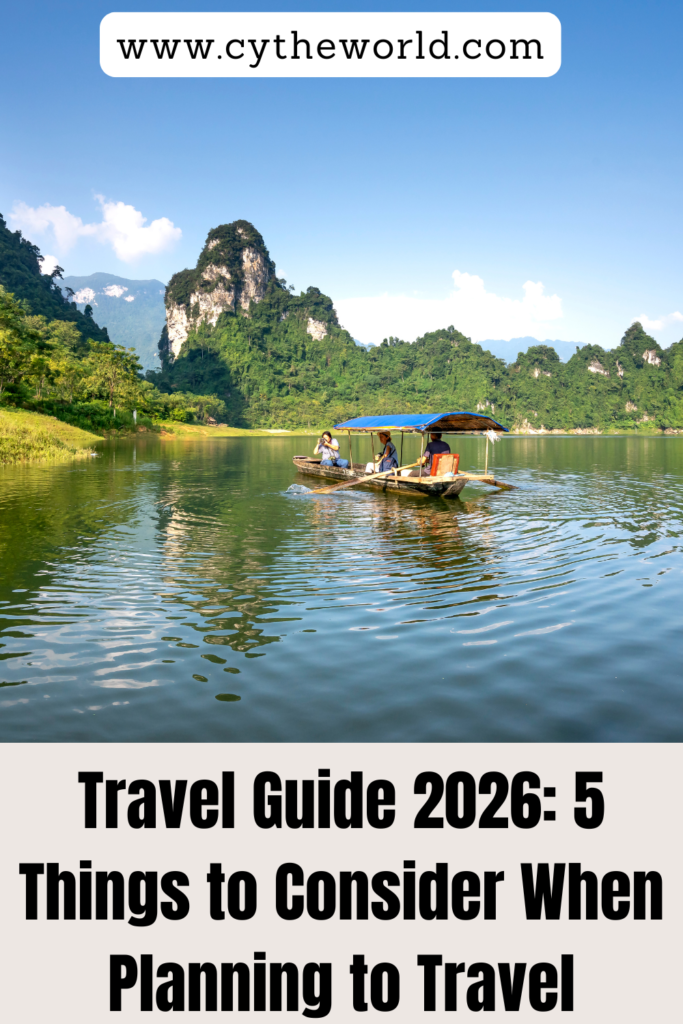
The third thing to consider is the climate, season, and the experience you want. One way some people think about climate and the environment is through the lens of security and feasibility. Am I going to a country where I will be safe? Mid-year last year, my mother had to take Qatar Airways and have a layover in Doha. She was concerned about geopolitical issues at the time. Two days after her flight to Doha, a missile was launched at the city, which freaked her out. You wouldn’t want to travel to a place where there is an active war, political unrest, or whatnot.
That is why watching the news and staying up to date on current events in the areas you want to visit are essential. However, when assessing your destination’s climate and environment, it is also crucial to specify your travel dates based on the experience you want to have. Your travel experience depends heavily on when and where you go.
When you sit down to write your travel goals, you must be very specific about the environment you want to be in. If you plan to travel to France, where specifically do you want to go? Are you envisioning swimming in the South of France or visiting the wineries in Bordeaux? Are you considering being solely in Paris, or would you like to visit Bretagne? Are you only interested in visiting tourist spots, or would you like a local experience? The environment you want to be in will dictate your experience; therefore, you must think of the environment you want to be in.
Another aspect of the environment concerns the cultural experiences you want to experience. Since our travel trends show people are traveling for concerts, sports, and festivals, it is important to align your travel goals to those events. For example, Carnival in Brazil takes place in the months leading up to Easter, not December. You may enjoy visiting New England during the summertime, but if you want to experience Halloween in Salem, you will have to book a New England road trip during the month of October.
Also, the timing of your trip will be crucial to your travel experience. Some destinations shine in the shoulder seasons, while others are best explored in peak summer. If you envision beach days in the Mediterranean but don’t want too many crowds, you may want to visit Europe during the fall season. Therefore, it is also crucial to consider how the weather/ season you want to travel in affects the activities you want to explore. Climate determines activities, costs, and overall satisfaction. Understanding climate, geography, and seasonality helps ensure your trip meets your expectations.
4. Language Feasibility & Cultural Comfort
The fourth thing to consider when planning your travel is the feasibility of using the local language. In our globalized world, internet connectivity has made it easier than ever to learn about different cultures, try diverse recipes, and gather a wealth of information. We interact with diverse cultures every day, but as travelers, one of the best ways to immerse ourselves is to learn the local languages of the places we want to visit. While English is often regarded as a global lingua franca, there are numerous destinations where having some basic language skills is invaluable.
During my 2023 visit to Milan and Rome, I found that even in tourist-heavy areas, vendors did not speak English. Sometimes, as travelers, we find comfort in knowing we will meet someone who speaks English in touristy areas. However, that was not true when I was in Italy. As someone who loves wandering around, I stumbled upon a small coffee shop that was hidden on the main road near Duomo Di Milano. The owner provided an Italian experience, giving me the opportunity to practice my Italian speaking skills because he did not speak English. I experienced the same in Thessaloniki, where my taxi driver did not speak English, so I had to rely on God to ensure I arrived at my destination safely and not get scammed.
In a previous post, I noted that one of the essential reasons to learn French when traveling to Paris was to ensure safety. This sentiment rings true in many countries where English isn’t the primary language outside tourist hotspots. Being visibly foreign can sometimes make travelers more vulnerable when visiting a new country. Therefore, assessing your ability to learn the country’s basic language skills is extremely vital. When planning your getaway, consider not only how you want to interact with locals but also your safety, especially if you are traveling solo.
With that said, you should not be discouraged if you do not speak a certain language before traveling. Language-learning apps like Rosetta Stone, Babbel, Pimsleur, and Talkpal can help you prepare and open a world of possibilities on your travels. These language resources not only teach you the basics but also prepare you for most interactions you will have while abroad. Although they will not make you lose your foreignness, they will help you immerse yourself and demonstrate that you are aware of what people around you are saying.
Therefore, before embarking on your journey, it’s important to assess whether you will rely solely on English or if you seek more meaningful local engagement. In places like Italy, France, and China, engaging with locals in their native tongue can significantly simplify daily interactions and enrich your travel experience. I did not have to pay for my meals in Shanghai because I used my Mandarin-speaking skills. Basic language knowledge not only aids in navigation and communication but also fosters a deeper cultural connection.

5. Financial Feasibility: Building a Travel Budget That Works
Last but not least, another vital factor to consider is finances. How much will it cost to enjoy yourself in location A versus in location B? If you are the type of person who likes shopping and you want to shop in the fashion capital of Paris, how much should you save for your expenditures? To evaluate financial feasibility, you must research the costs of accommodation, in-country transportation, daily meals, and leisure activities. As a solo traveler, would you prefer a hotel or a hostel? Would it be cheaper to book an Airbnb or stay at a hotel? Would it be better to have your place where you can cook for yourself, or would you rather dine out and try different local cuisines? These are questions to ask when figuring out how you want to experience your time abroad.
As an experienced traveler, I prefer staying in hotels. I like dining out and mingling with locals, and shopping for clothes is only a priority if I want something specific or a souvenir. Therefore, when I plan, I search for hotels on Booking.com or Expedia that include breakfast so I can dine out and try different local cuisines in the evening. When you are a beginner in the travel space, you may not know what you want, so when planning out your goals, try to mirror them to what you already know and do in your daily life. Save accordingly based on the experience you want to have.
Every dream destination must match your financial reality. However, some countries are ideal for budget travelers. I previously discussed my experience visiting Shanghai on a budget of less than $500. Although there are many free activities to enjoy in major tourist destinations, you do not need to have a lot of money to enjoy them. Cities like Brussels offer excellent options for budget travelers, including free entry to museums and royal palaces. That is why it is important to conduct research to identify those resources when planning your finances.
When evaluating affordability, research:
- Flights
- Accommodation
- Transportation
- Daily food expenses
- Activities, shopping, and experiences
Overall, remember that your travel style matters. Your budget should reflect your lifestyle preferences, not social media trends. Travel becomes sustainable when your financial plan aligns with your goals.
Conclusion
In conclusion, the new year is a great time to plan your travel goals. It is a time to set the tone for what you want to accomplish this year. If travel has been on your mind and you want to achieve that goal this year, these are the factors to consider when setting up your travel plans. Do your research on the places you want to visit. Understand that to have a fantastic travel experience, the experience should be about you. It should reflect what you like or what new adventure you want. When your travel goals are built around purpose, preparation, and passion, each journey becomes more than a trip; it becomes a chapter of your life. Make 2026 the year you truly explore. Create a travel experience that allows you to live boldly, explore intentionally, and create memories worth retelling.
If this guide sparked an idea or confirmed a dream you’ve been holding onto, take that as your sign to start planning. Share your travel goals or questions in the comments; I’d love to support your journey.
Here’s to crossing borders, building memories, and finally choosing yourself.
Until next time,
Happy planning, and happy travels.
Xoxo,
Cy

Leave a Reply
You must be logged in to post a comment.